How a Trench Drain Works
A trench drain is a long, linear channel drain set into concrete or asphalt that collects surface water along its full length and carries it into a storm sewer or drainage system. Unlike a single point drain, which only catches runoff from directly above it, a trench drain intercepts water across an entire width of pavement — which is exactly why so many commercial properties rely on them at entrances, loading docks, and drive lanes where water sheets across a wide paved surface.
The channel itself sits flush with the surrounding surface, topped with a metal or polymer grate rated for the traffic passing over it. Water enters through the grate along the drain’s entire length, flows down a sloped channel bottom, and exits through an outlet pipe tied into the site’s storm sewer or a dedicated dry well. That continuous capture is the key difference from a catch basin, which only collects water that happens to reach its single inlet point.
Trench drains typically come in standardized channel widths and depths, with the slope built into either the channel body itself (a self-sloping or ‘neutral lot line’ style channel) or achieved by sloping the surrounding concrete or asphalt toward a level channel. Self-sloping channels are more forgiving to install correctly, since the slope is manufactured into the product rather than dependent on the surrounding pavement being graded precisely — a meaningful consideration on a retrofit where the existing surface elevations are fixed.




4.9 Google Rating


Why Standing Water Is a Bigger Problem Than It Looks
On a commercial property, standing water isn’t just an inconvenience — it’s a liability. Pooled water at a building entrance or loading dock creates a slip-and-fall risk, and in colder months it refreezes overnight into black ice that’s far more dangerous than snow. Water that isn’t captured and redirected also tends to find its way toward foundations, door thresholds, and below-grade spaces, where it can cause much more expensive damage than the cost of installing proper drainage in the first place. For property managers, that makes trench drains less of an upgrade and more of a basic risk-management tool.
There’s also an insurance and liability angle that’s easy to overlook. A slip-and-fall claim tied to a known, recurring puddle at a building entrance is a much harder position to defend than one where drainage was addressed proactively. Property managers who track maintenance requests often find that a disproportionate share of complaints trace back to the same one or two drainage weak points on a site — and those are usually the spots where a trench drain pays for itself fastest.
Where Trench Drains Are Used on Commercial Sites
Parking lot entrances and drive lanes are the most common location, since these areas concentrate a large volume of runoff from a wide paved surface and funnel it toward one path — exactly the kind of load a standard catch basin isn’t designed to handle on its own.
Loading docks and service bays need trench drains for a different reason: beyond stormwater, these areas often deal with wash-down water, minor spills, and vehicle traffic that a point drain would get run over or clogged by.
Building perimeters and drive-through lanes are frequent installation points too, particularly where a slab or curb creates a natural low point that would otherwise pool water against the building.
A commercial trench drain differs from the residential version mainly in load rating — it has to handle the weight of trucks and heavy equipment driving directly over the grate, not just foot traffic, so the frame, grate, and channel body are all built to a higher standard.

A Few More Things Worth Knowing
One more thing worth knowing: a trench drain is only as good as the system it feeds into. If the storm sewer or catch basin it connects to is undersized or already at capacity, adding a trench drain just moves the water problem downstream instead of solving it — which is why a proper assessment looks at the whole drainage path, not just the section that’s visibly pooling.
Retail and grocery entrances see some of the highest foot traffic on any commercial property, which makes the slip-and-fall risk from pooled or refrozen water especially serious — a trench drain across the entrance apron is one of the more common retrofit requests we get.
Fuel stations and car washes deal with both stormwater and process water from washing or fueling operations, and often need trench drains connected to an oil-water separator rather than directly to the storm sewer, depending on local environmental requirements.
Winter maintenance is a factor too — a trench drain positioned where snowplows regularly pass needs a grate rated to handle plow blade contact, and the drain body itself needs to sit at the correct depth so it doesn’t get caught or damaged during clearing.
What Trench Drain Installation Involves
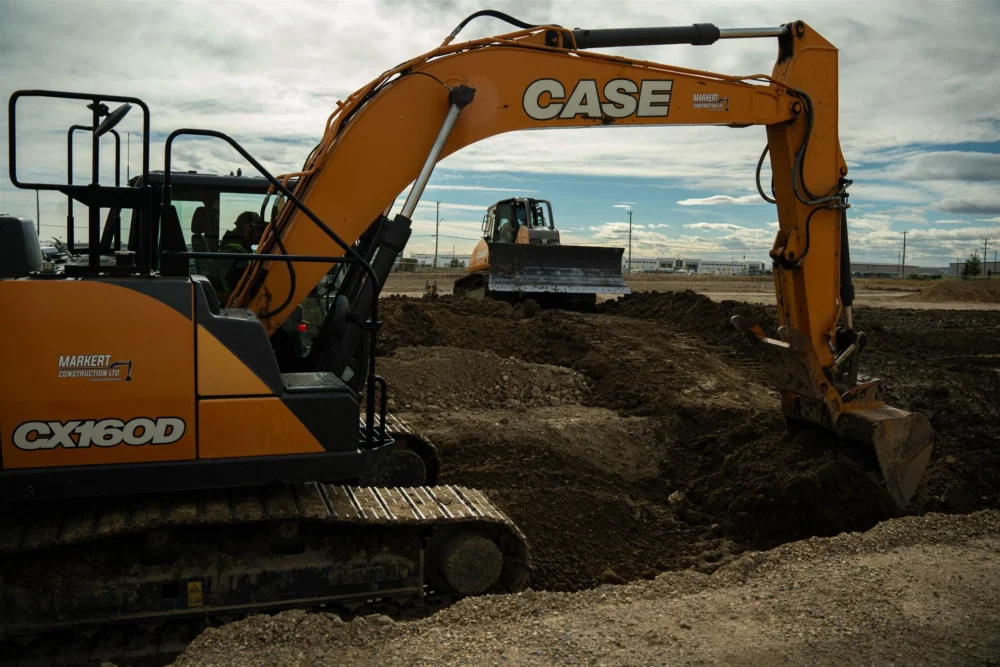
Trench drain installation starts with grading the surrounding asphalt or concrete so water actually slopes toward the channel instead of pooling beside it, then setting the drain body at the correct elevation and tying it into the site’s storm sewer or catch basin system. On an existing lot, that usually means cutting into finished pavement, connecting the new line into the existing drainage network, and patching the surface to match — work that’s much easier to plan properly the first time than to retrofit after a drainage problem has already caused damage. Getting the slope and tie-in right is what determines whether a trench drain keeps working quietly for years or turns into a recurring maintenance call.
Material choice also matters more than most property owners expect. Polymer concrete channels resist the freeze-thaw cycling that cracks standard concrete over time, while the grate material — galvanized steel, stainless steel, or ductile iron — is chosen based on load rating and how much salt and de-icing chemical exposure the site sees each winter. Specifying the wrong grate for a heavy-traffic commercial lot is one of the more common reasons a trench drain fails early.
Long-term performance also comes down to maintenance access. A trench drain with a removable, hinged, or lockable grate makes periodic cleaning straightforward; one that’s difficult to open gets skipped during routine maintenance, and sediment quietly builds up until the drain stops functioning during exactly the storm event it was installed for. Specifying accessible grates at installation is a small design decision that has an outsized effect on how the drain performs five or ten years later.