Asphalt Repair: For Isolated Damage
Asphalt repair covers targeted fixes for a lot that’s otherwise structurally sound — pothole repair, crack filling, and patching localized areas of damage. If the base underneath hasn’t failed and the wear is limited to a handful of spots, repair is almost always the faster and more cost-effective route, and a well-executed patch can extend a lot’s usable life by years without the disruption of a full paving crew on site.
Common repair techniques include hot-mix patching, where the damaged section is cut out and replaced with fresh asphalt, and infrared repair, which reheats the existing surface around a pothole so the patch bonds seamlessly instead of leaving a visible seam. Crack sealing — filling cracks with a flexible sealant before water can get underneath — is the cheapest and most effective preventive repair available, but only works while cracks are still narrow and isolated.
Timing matters for repair work too. Asphalt patching is most effective when temperatures are warm enough for the new material to compact and bond properly, which is why many commercial properties schedule repair work in spring or fall rather than waiting until winter damage has already widened cracks and deepened potholes past the point where a simple patch will hold.



4.9 Google Rating


Why the Same Cracks Keep Coming Back
One of the most common questions property owners ask is why a patched pothole reappears in the same spot a season later. The answer is almost always the base, not the asphalt itself. Asphalt is a surface material — it flexes and wears based on what’s underneath it. If water has worked its way under the pavement and softened the base, or if the original compaction was inadequate, a surface patch will fail again because it’s treating a symptom rather than the underlying cause. That’s the point where a lot moves from the repair category into needing resurfacing or, in more serious cases, reconstruction.
Water is almost always the mechanism behind base failure. It gets into the pavement through a crack, saturates the aggregate base underneath, and — especially through freeze-thaw cycles — expands and contracts in a way that breaks up the base structure from below. Once that happens, no amount of surface patching addresses the actual problem, which is why the same pothole often reappears in exactly the same spot even after a professional repair.
Asphalt Resurfacing: Resetting a Worn Surface
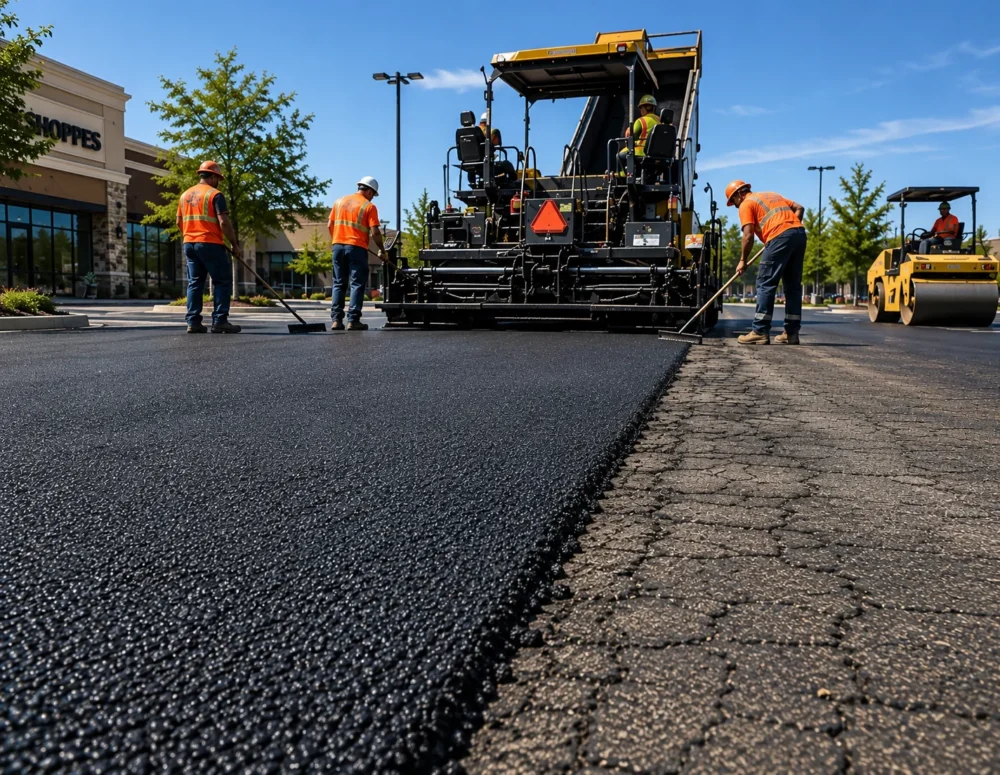
Asphalt milling removes the top layer of worn pavement — typically an inch or two — down to a stable surface, which lets the new asphalt bond properly instead of simply being laid over cracks and imperfections that will telegraph back through within a season.
The asphalt overlay that follows is a fresh wear course placed over the milled surface, restoring a smooth, uniform finish across the whole lot rather than a patchwork of individual repairs of varying age and color.
Resurfacing resets the grade as well as the surface, which matters at drains, curbs, and door thresholds — a lot that’s been patched repeatedly over the years often ends up with inconsistent elevations that resurfacing corrects in one pass.
Because resurfacing addresses the whole lot at once, it’s typically more cost-effective per square foot than an equivalent amount of scattered repair work, even though the upfront project cost is higher.

A Few More Things Worth Knowing
It’s also worth factoring in how the lot is used day to day. A lot with heavy truck traffic, frequent turning movements at entrances, or dumpster and loading areas wears unevenly, and those high-stress zones often need resurfacing well before the rest of the lot shows comparable wear — in those cases, resurfacing just the affected section can be more practical than either patching indefinitely or repaving the entire property.
Full-depth reclamation is worth mentioning as a middle option between resurfacing and full reconstruction — it pulverizes the existing asphalt and base together, mixes them, and recompacts the blend as a new base before a fresh asphalt layer goes on top, which can be more economical than trucking out the old material entirely.
Climate plays a real role in how long either repair or resurfacing lasts. In regions with hard freeze-thaw cycles, both surface repairs and full resurfacing tend to have shorter service lives than in milder climates, which is part of why a proactive sealcoating and crack-sealing schedule matters more in colder markets.
Cost per square foot is worth comparing directly rather than assuming repair is always cheaper: once repair work covers more than roughly 25-30% of a lot’s surface area, the labor and mobilization cost of scattered patching often approaches what a full resurfacing would cost, without resetting the surface or extending the pavement’s life the way resurfacing does.
How to Decide What Your Lot Actually Needs
The deciding factor is how much of the lot is affected and whether the problem is at the surface or in the base. Alligator cracking — a web of interconnected cracks resembling reptile skin — potholes that return shortly after being patched, and soft spots that flex visibly under a vehicle’s weight are all signs the base has failed and a patch will only buy a season or two. On the other hand, a handful of isolated cracks or potholes on a lot with a solid base are exactly what asphalt repair is designed to fix. Keeping up with routine parking lot maintenance — sealcoating every few years and addressing cracks as soon as they appear — is what keeps a lot in the repair category longer and pushes back the more expensive resurfacing timeline.
A simple way to think about the decision: if you can point to specific, isolated spots on a walk-through, it’s probably repair. If you find yourself pointing at the whole lot, it’s probably time to talk about resurfacing. Either way, an assessment that actually checks the base — not just the visible cracking — is what keeps that decision from being a guess.
Budgeting for the right scope the first time also avoids a common trap: patching a lot repeatedly over several seasons can end up costing more in total than one properly planned resurfacing project, without ever actually solving the underlying problem. A short assessment upfront — checking a few cores or test pits if there’s doubt about the base — is a small cost against either outcome.